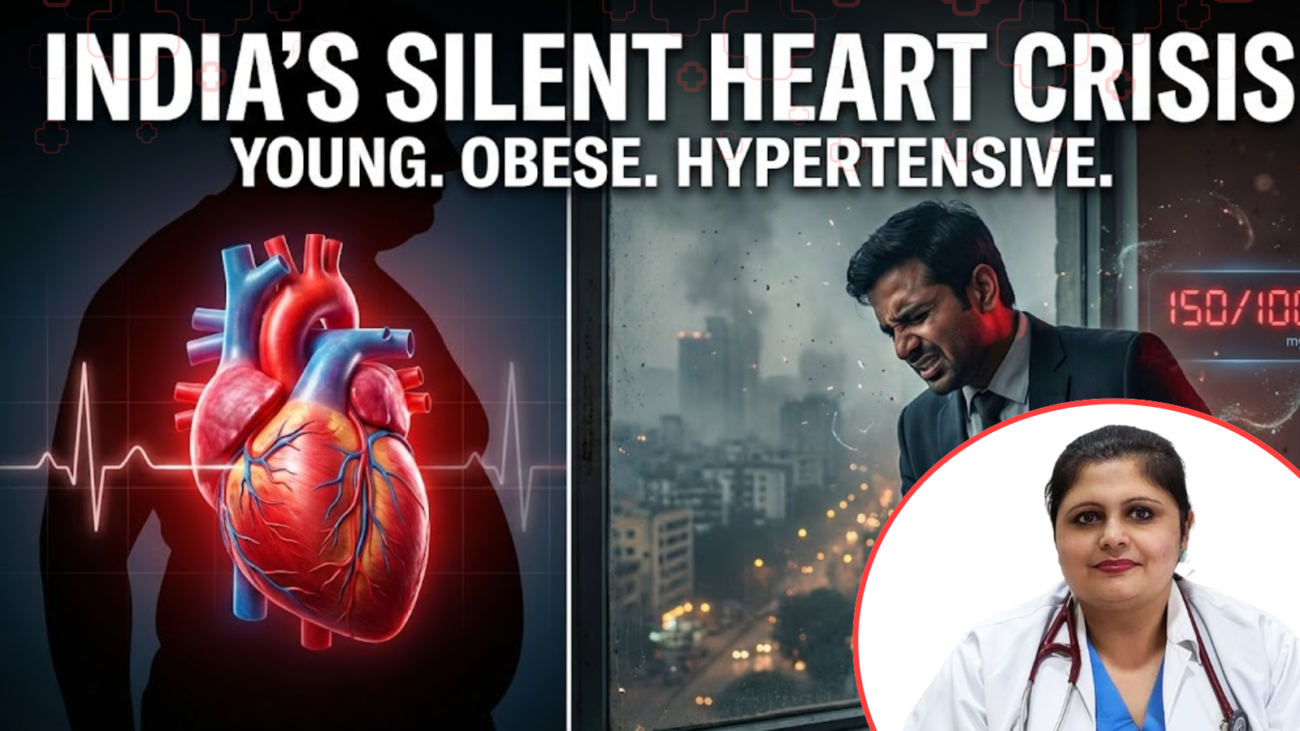
India is facing a heart health emergency — and it’s unfolding quietly.
Heart disease is no longer a condition affecting only the elderly. Across metro cities and smaller towns alike, cardiologists are reporting a disturbing rise in heart attacks among people in their 30s and 40s. Increasing obesity, uncontrolled high blood pressure, chronic stress, air pollution, and sedentary lifestyles are accelerating cardiovascular risk at an unprecedented pace.
Recent projections suggest that nearly one-third of India’s population could be obese by 2050. Meanwhile, hypertension continues to remain underdiagnosed and poorly controlled. Add rising pollution levels in urban regions, and the picture becomes even more concerning.
This article examines the four major drivers of India’s growing cardiac crisis — obesity, high blood pressure, pollution, and delayed diagnosis — and what individuals can do to protect themselves.
Why Are Heart Attacks Rising Among Young Indians?
Cardiologists across India have observed a clear pattern: younger patients are arriving at emergency rooms with acute heart attacks far more frequently than before.
Several contributing factors stand out:
- High stress jobs and long working hours
- Sleep deprivation
- Processed and high-salt diets
- Smoking and vaping
- Undetected hypertension
- Family history of heart disease
A detailed explainer on why heart attacks are increasing in young people in India breaks down the changing risk patterns seen in urban populations.
A recent media feature discussing the alarming increase in cardiovascular diseases highlights how lifestyle changes and metabolic disorders are pushing heart risk earlier in life. (Internal link: Firstpost cardiovascular surge article)
Many people still confuse cardiac arrest with heart attack, but understanding the difference is crucial — as explained in this guide on heart attack vs cardiac arrest differences.
Similarly, coverage explaining the growing number of heart attacks in young Indians provides insight into how risk factors are evolving. (Internal link: News18 youth heart attack article)
Recent national coverage has examined the alarming rise in cardiovascular diseases among young Indians, highlighting how lifestyle disorders are accelerating heart risk.
Heart Attack vs Cardiac Arrest: Know the Difference
Many people use these terms interchangeably, but they are medically distinct.
- Heart attack: A blockage in the coronary arteries stops blood flow to heart muscle.
- Cardiac arrest: The heart suddenly stops beating due to electrical malfunction.
Understanding the difference can save lives — especially in emergency response situations. (Internal link: Heart attack vs cardiac arrest explanation article)
Obesity: The Biggest Hidden Trigger of Heart Disease
India is simultaneously battling undernutrition and rising obesity. Urban dietary patterns have shifted dramatically toward refined carbohydrates, processed foods, and sugary beverages.
Multiple national media reports have covered new findings projecting that obesity rates in India may surge sharply by 2050. (Internal link: India Today obesity study article)
Excess body fat, particularly visceral fat around the abdomen, triggers:
- Chronic inflammation
- Insulin resistance
- Elevated cholesterol
- Increased blood pressure
Over time, this metabolic cascade damages blood vessels and accelerates atherosclerosis — the primary cause of heart attacks.
According to recent projections covered in national media, nearly one-third of Indians may be obese by 2050, raising serious cardiovascular concerns.
In expert commentary featured across publications such as Financial Express, BW Healthcare World, and Firstpost, cardiologists have emphasized that obesity is not merely a cosmetic concern but a major cardiovascular threat. (Internal links: Financial Express article, BW Healthcare article, Firstpost obesity feature)
Experts have warned that obesity is not just a lifestyle issue but a ticking time bomb for heart disease.
Is Diet More Responsible Than Exercise?
While physical inactivity contributes to weight gain, several recent analyses suggest diet plays a larger role in India’s obesity surge. (Internal link: India Today diet vs exercise article)
High refined carb intake, excessive salt, trans fats, and sugary snacks are compounding metabolic risk — even among individuals who appear “moderately active.”
On World Obesity Day, doctors highlighted how India’s obesity rates are surging across all age groups.
A recent analysis also examined whether diet plays a bigger role than exercise in India’s obesity crisis.
High Blood Pressure: The Silent Killer
Hypertension rarely produces noticeable symptoms in early stages, yet it quietly damages arteries for years.
According to global health data, over 1.4 billion people worldwide suffer from high blood pressure — but only a fraction manage to control it effectively. Media coverage discussing the rapid rise in high blood pressure highlights the urgency of awareness and screening. (Internal link: ABP News BP article)
Common contributors in India include:
- High salt consumption
- Chronic stress
- Sedentary work culture
- Obesity
- Poor sleep
Early Symptoms People Often Ignore
Although hypertension is often silent, some warning signs may appear:
- Persistent headaches
- Dizziness
- Blurred vision
- Fatigue
- Shortness of breath
WHO-backed data suggests that high blood pressure cases are rising rapidly worldwide, with India contributing significantly.
Excessive salt intake remains one of the biggest dietary drivers. Experts have repeatedly cautioned against high sodium consumption in daily meals. Doctors also warn that excessive salt intake can significantly increase heart risk.
Without treatment, hypertension significantly increases the risk of heart attack, stroke, and kidney disease.
Pollution & Heart Risk: An Overlooked Urban Danger
Air pollution is typically associated with respiratory problems — but its cardiovascular impact is equally serious.
Fine particulate matter (PM2.5) enters the bloodstream, triggering inflammation, increasing clot formation, and narrowing blood vessels.
Recent expert commentary has drawn attention to the link between pollution spikes and rising cardiovascular emergencies. Health experts recently cautioned that pollution spikes are increasing cardiovascular and respiratory problems in urban India.
Urban residents — particularly in Delhi NCR — face higher cumulative exposure. Those with existing hypertension, diabetes, or heart disease are especially vulnerable.
Stroke Warning Signs You Should Never Ignore
Stroke is one of the leading causes of disability and death in India. What many people don’t realize is that warning signs often appear days before a major event.
Reports indicate that nearly half of stroke patients experience symptoms in the week prior. Research suggests that almost half of stroke patients report warning signs one week before the event.
These may include:
- Sudden numbness or weakness (especially on one side)
- Difficulty speaking
- Facial drooping
- Sudden severe headache
- Loss of coordination
The FAST rule helps identify emergencies:
- Face drooping
- Arm weakness
- Speech difficulty
- Time to call emergency services
Immediate treatment dramatically improves survival and recovery.
For advanced cardiac evaluation and preventive heart screening, patients can consult Dr. Sukriti Bhalla, Senior Consultant – Cardiology at Aakash Healthcare, New Delhi, who has been widely featured for her expert insights on heart health.
Dr. Sukriti Bhalla, Senior Consultant – Cardiology at Aakash Healthcare, New Delhi
How to Protect Your Heart in 2026: Practical Prevention Steps
The encouraging news? Most cardiovascular risk factors are modifiable.
Here are practical steps:
- Get annual heart screening after age 30
- Monitor waist circumference
- Reduce salt intake
- Exercise at least 30 minutes daily
- Maintain 7–8 hours of sleep
- Stop smoking and avoid vaping
- Limit alcohol consumption
- Manage stress through mindfulness or therapy
- Check lipid profile and blood sugar regularly
- Know your family history
Small, consistent changes can significantly lower long-term risk.
When Should You See a Cardiologist?
You should consult a heart specialist if you experience:
- Recurrent chest discomfort
- Breathlessness on mild exertion
- Repeated high BP readings
- Strong family history of heart disease
- Diabetes combined with obesity
Early evaluation prevents major emergencies.
For individuals seeking expert cardiac evaluation, you can learn more about Dr. Sukriti Bhalla, Senior Consultant – Cardiology, Aakash Healthcare (New Delhi), and her work in interventional cardiology here:
(Internal link: India’s Super Top 10 Cardiologist in Delhi profile page)
Dr. Bhalla has also shared expert insights in multiple national publications addressing obesity, cardiovascular risk, pollution, and hypertension trends.
Conclusion: Awareness Is the First Line of Defense
India’s heart health crisis is real — but it is preventable.
Obesity, uncontrolled blood pressure, poor dietary habits, rising pollution, and delayed screenings are accelerating cardiovascular risk. However, informed lifestyle changes and timely medical consultation can significantly reduce the likelihood of heart attack or stroke.
Heart disease is no longer an “old age problem.” Prevention must begin early — in your 30s, not your 60s.
Regular check-ups, healthy habits, and early action remain the most powerful tools in protecting your heart.
Frequently Asked Questions (FAQs)
1. Why are heart attacks increasing among young Indians?
Rising obesity, stress, sedentary lifestyles, smoking, poor diet, and undiagnosed hypertension are major contributors to early heart disease in India.
2. Can obesity directly cause heart disease?
Yes. Obesity increases inflammation, cholesterol levels, insulin resistance, and blood pressure — all of which significantly raise heart attack and stroke risk.
3. Does air pollution affect heart health?
Yes. Fine particulate matter (PM2.5) can enter the bloodstream, trigger inflammation, increase clot formation, and worsen existing heart conditions.
4. What are early warning signs of a stroke?
Sudden numbness, facial drooping, difficulty speaking, weakness on one side, and severe headache are early warning signs. Immediate medical attention is critical.